
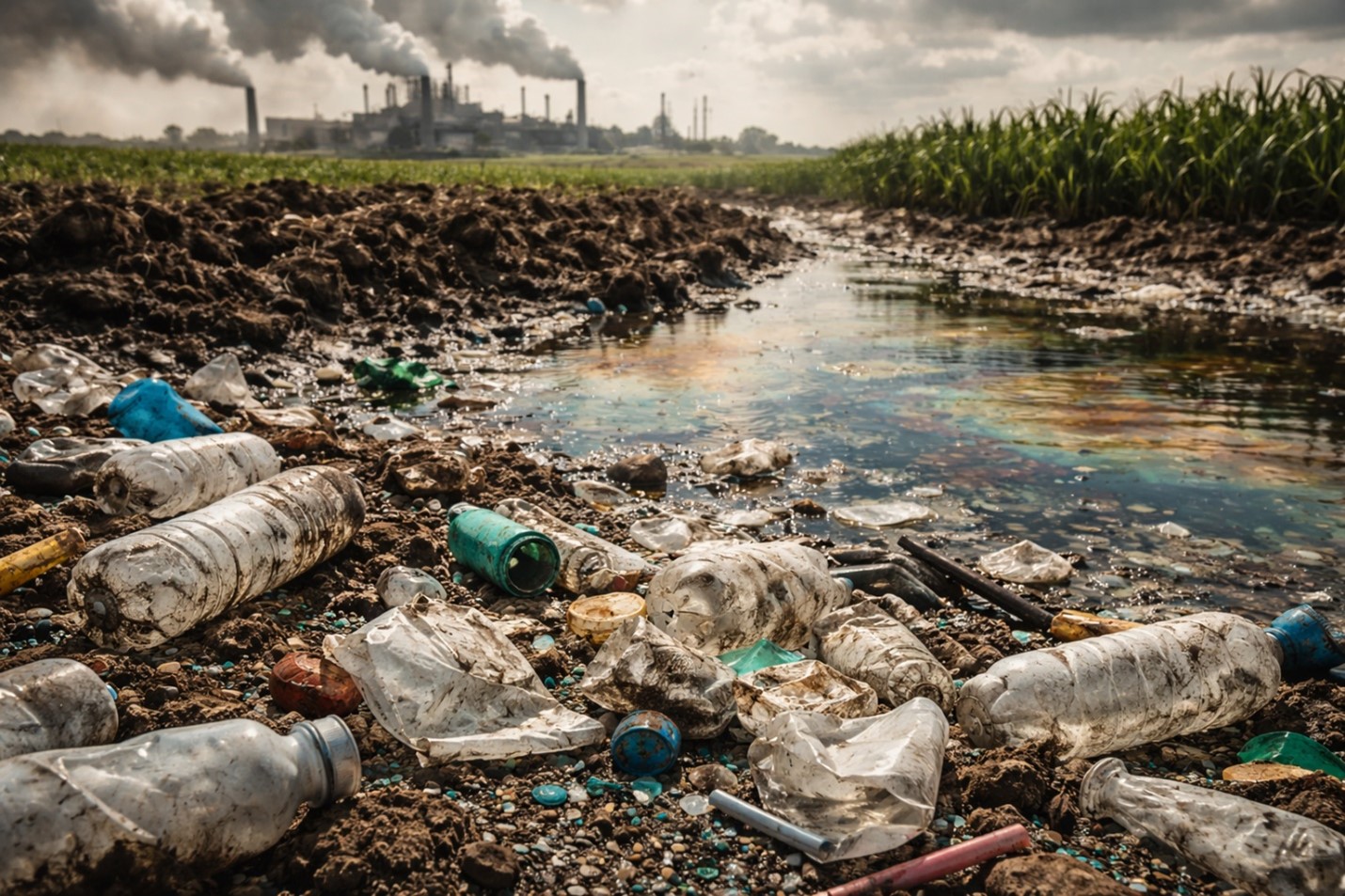
From microplastics in human blood to PFAS in farmland the toxic legacy of regulatory inaction and what needs to change
Plastic: The Recycling Myth
In the US, only 5–6% of plastic is recycled, down from 9.5% in 2014. Sixty percent of collected plastic was recycled in 2019, but only 15% of all plastic waste was collected in the first place. In Minnesota, about 10% of the 650,000 tons generated annually is repurposed into new products.
Plastic production is expected to reach 500 million metric tons by 2050. The world already produced 350 million metric tons of plastic waste in 2024. Plastic use has increased continuously since the 1960s.
The Seven Types of Plastic and Which Are Most Dangerous
- PET (Type 1): Made from polyethylene terephthalate, used for food and drink packaging. Widely recyclable plastic drink bottles are the most recycled plastic globally.
- HDPE (Type 2): High-density polyethylene used in grocery bags, milk cartons, and shampoo bottles. The easiest plastic to recycle.
- PVC (Type 3): Polyvinyl chloride, the third most widely produced plastic. Used in construction, piping, flooring, and wiring. Hardly recyclable.
- LDPE (Type 4): Low-density polyethylene, used in plastic bags, six-pack rings, and plastic wrap. Rarely recycled.
- PP (Type 5): Polypropylene, the second most widely produced plastic. Found in Tupperware, car parts, yogurt containers, and disposable diapers.
- PS (Type 6): Polystyrene, one of the most problematic plastics. Used in beverage cups, insulation, egg cartons, and disposable dinnerware. Not biodegradable. It floats on water and is mistaken for food by marine birds and animals.
- PC (Type 7): Polycarbonates, used in eye protection, sunglasses, cell phones, and compact discs. At high temperatures, releases bisphenol a hazardous chemical linked to hormone disruption.
Microplastics: The Invisible Threat Inside Us
Microplastic is found from pole to pole. It has been discovered in placentas and fetuses. Research shows microplastics reduce the ability to learn and clog blood vessels, increasing the risk of stroke and heart attack. Most plastic cannot be recycled.
As Jack Landymore reported in Futurism: microplastics are so invasive they’re found in our bloodstreams, bones, and according to one alarming study even our brains, in quantities sufficient to form a plastic spoon.
One underreported source: tire wear. Every time a vehicle brakes or turns, microscopic rubber and plastic particles become airborne and settle into waterways, soil, and human bodies.
This is an issue of fiscal and public health accountability the long-term medical costs of microplastic exposure will ultimately fall on taxpayers and overwhelm programs like Medicare. The Purple Revolution connects environmental policy to fiscal responsibility.
A Promising Scientific Solution: Graphene from Plastic
A Rice University experiment found a way to repurpose plastic by heating it with charcoal to 3,150 degrees, generating hydrogen and graphene a material used in next-generation batteries. Graphene batteries have greater capacity and recharge faster than lithium-ion batteries. The byproduct hydrogen could also power vehicles or be burned cleanly to produce water.
The challenge is cost: graphene remains expensive to produce at scale. Much of the plastic stream is also contaminated with food waste and cannot be reused. Scaling this technology economically could be one of the most impactful environmental investments America makes.
PFAS: Forever Chemicals in Our Food, Water, and Bodies
Perfluoroalkyl and polyfluoroalkyl substances (PFAS) have been in use since the 1940s. They break down very slowly and accumulate in people, animals, and the environment over decades. PFAS are found in drinking water, soil near waste sites, fire extinguishers, food packaging, nonstick cookware, stain-resistant carpets and clothing, shampoo, dental floss, and cosmetics.
Documented health effects include: decreased fertility and high blood pressure in pregnant women, developmental harm including low birth weight, accelerated puberty, and behavioral changes, increased risk of prostate, kidney, and testicular cancer, reduced immune function and reduced vaccine efficacy, and increased cholesterol and obesity risk.
Note: Minnesota has banned PFAS.
PFAS on America’s Farmland: A Government-Created Crisis
For decades, the US government encouraged farmers to spread municipal sewage sludge on millions of acres of farmland. It was rich in nutrients and kept sludge out of landfills. What regulators failed to disclose: the sludge contained heavy concentrations of PFAS chemicals linked to cancer, birth defects, and developmental delays.
These chemicals have been detected at high levels on farmland in Texas, Maine, Michigan, New York, and Tennessee. In some cases, they are suspected of sickening or killing livestock and contaminating produce. Farmers fear for their own health. In Michigan, one farm was shut down permanently and its land was prohibited from ever again being used for agriculture. Other farms have not been investigated partly out of concern for the agricultural industry’s economic impact.
The EPA’s Decades-Long Failure
PFAS were invented in the 1930s. Widespread use began in the 1940s, expanding dramatically in the 1950s with DuPont’s invention of Teflon (1938), leading to applications in nonstick pans, firefighting foams, and waterproof fabrics. Industry scientists knew of the dangers as early as the 1960s internal studies showed liver damage, fetal harm, and animal deaths. The public and regulators were not informed until the late 1990s. The EPA did not issue standards for PFAS in drinking water until April 2024.
Typical of the EPA: more concerned about economic impact than harm to humans.
This pattern industry capturing regulators is exactly the kind of systemic failure the Purple Revolution is built to oppose. Read about how government fiscal irresponsibility and regulatory neglect are connected, and explore the full Purple Revolution blog for more.
Frequently Asked Questions
What percentage of plastic is actually recycled in the US?
Only 5–6% of plastic in the US is currently recycled down from 9.5% in 2014. The global recycling infrastructure cannot handle the volume produced, and much plastic is contaminated or made of types (PVC, PS, LDPE) that are rarely recyclable.
What are PFAS chemicals and why are they dangerous?
PFAS (per- and polyfluoroalkyl substances) are man-made chemicals used in cookware, food packaging, firefighting foam, and clothing since the 1940s. They do not break down in the environment or the human body, accumulating over time. They are linked to cancer, infertility, immune suppression, and developmental harm in children.
Are PFAS chemicals in US drinking water?
Yes. PFAS have been detected in drinking water supplies across the United States, particularly near military bases, airports, and industrial sites that used PFAS-containing firefighting foam. The EPA only issued formal standards for PFAS in drinking water in April 2024 more than 80 years after widespread use began.
What is the graphene-from-plastic process developed at Rice University?
Researchers at Rice University developed a process that heats plastic with charcoal to extreme temperatures (3,150°F), producing graphene (used in advanced batteries) and hydrogen (usable as clean fuel). If scaled economically, this could transform plastic waste from an environmental liability into a renewable energy resource